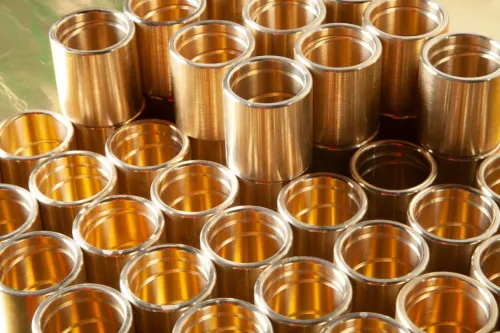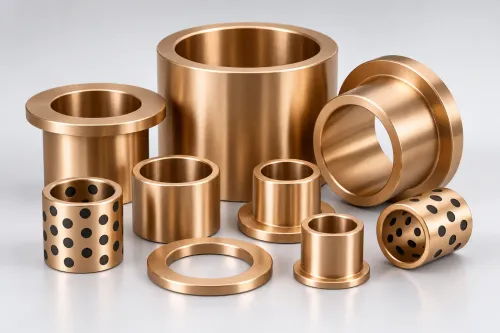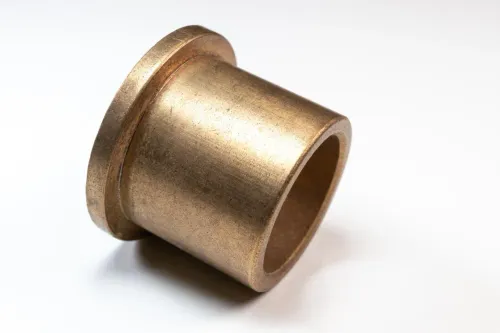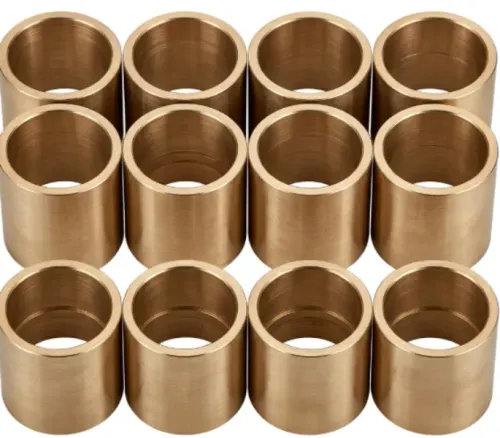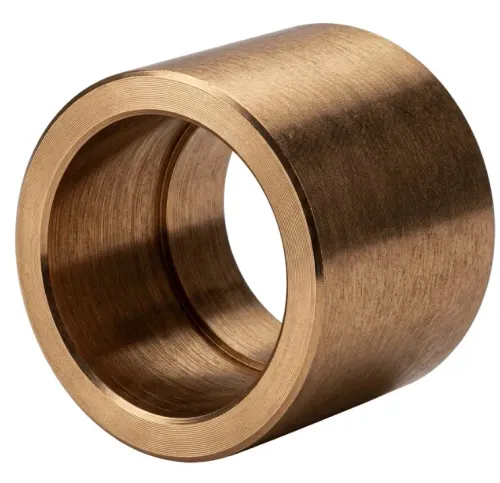
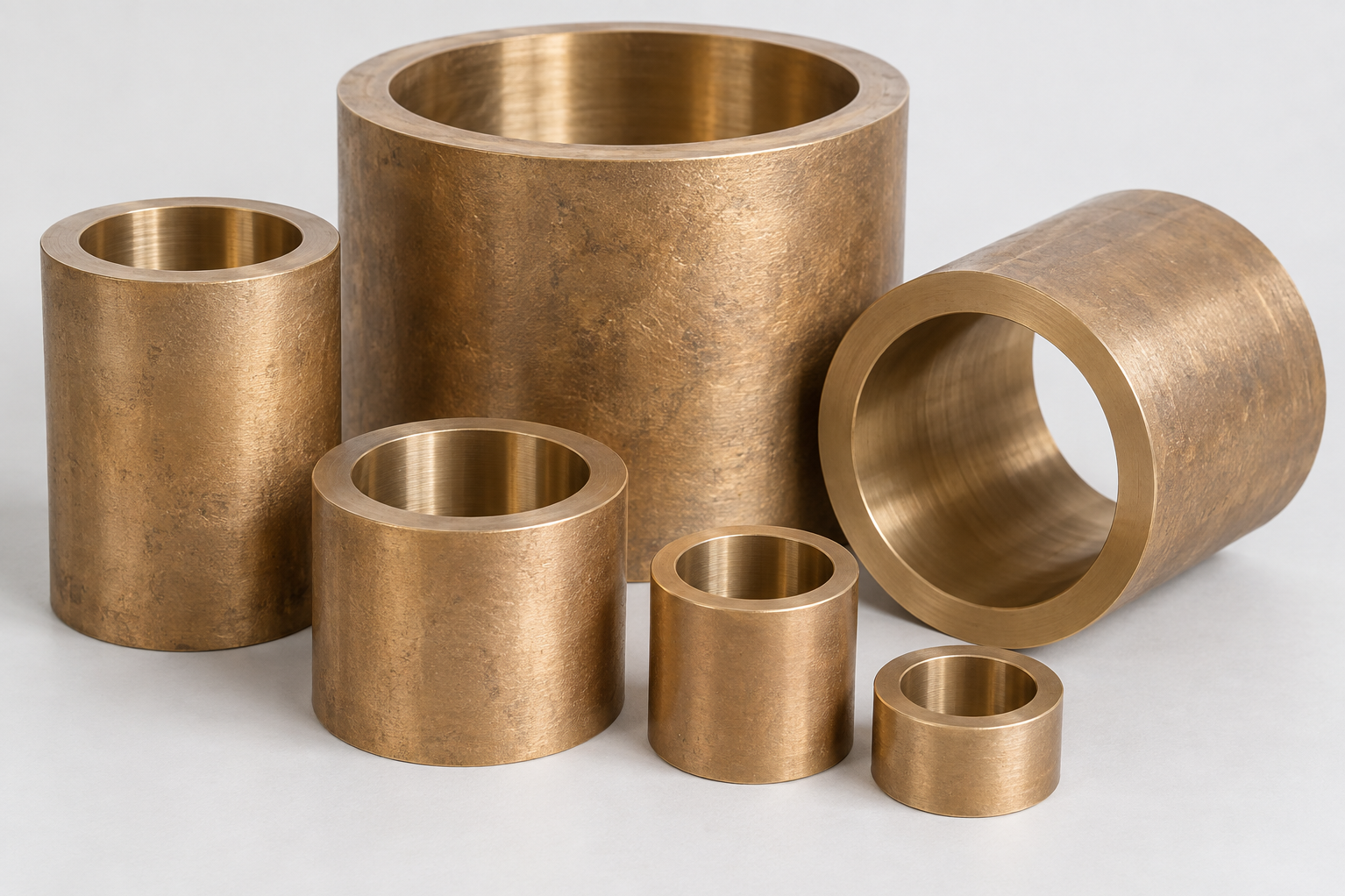
Cylindrical bronze components are common throughout industrial machinery, but producing them reliably requires attention to both material and manufacturing process. Phosphorus Bronze Centrifugal Castings combine the engineering characteristics of phosphor bronze with a casting method particularly suited to hollow and cylindrical forms.
This combination is relevant for engineers sourcing bushes, sleeves, rings, liners, and related wear components.
Why Centrifugal Casting Fits Cylindrical Components
In centrifugal casting, molten metal is introduced into a rotating mould. Rotation forces the material outward against the mould wall while it solidifies.
Unlike some conventional casting methods, the process can form hollow cylindrical sections without requiring the same type of central core arrangement.
This makes it particularly practical for components that will subsequently be machined into bushes, bearings, sleeves, or rings.
What Phosphor Bronze Contributes
Phosphor bronze is a copper-tin-based alloy family containing phosphorus in controlled amounts. Depending on grade and composition, it can offer useful wear, strength, fatigue, and bearing characteristics.
When the alloy is selected for a moving-machine component, engineers typically consider factors such as:
- Bearing load
- Sliding speed
- Lubrication
- Shaft material
- Operating temperature
- Wear expectations
- Corrosion conditions
The casting process cannot compensate for selecting an unsuitable alloy grade, so both decisions must be considered together.
Understanding the Machining Stage
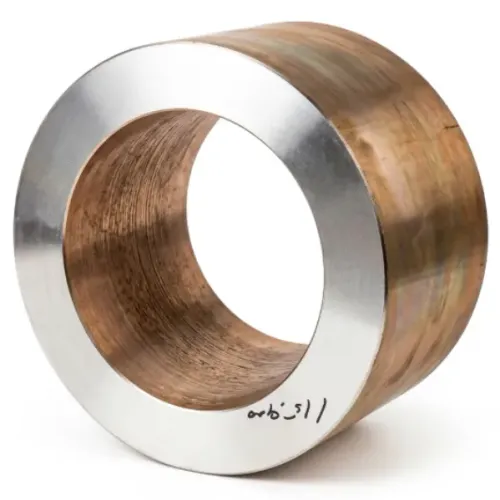
A centrifugal casting is often produced with machining allowance on its inside and outside diameters and ends.
This is important because the final component may require accurate bore dimensions, concentricity, surface finish, or other geometric controls.
Procurement teams should therefore distinguish between:
As-cast supply: The casting is supplied substantially in its cast condition.
Rough-machined supply: Excess material is removed and the casting is prepared for subsequent finishing.
Finished component: Machining is completed to the dimensions and tolerances defined by the drawing.
Clarifying the required supply condition prevents misunderstanding during quotation.
Where These Castings Can Be Applied
Phosphor bronze centrifugal components may be considered for industrial machinery, pump assemblies, gear equipment, bearing systems, heavy engineering machinery, material handling equipment, and maintenance replacement applications.
The exact suitability depends on alloy grade and operating conditions.
For example, a slow-moving heavily loaded bush presents a different tribological requirement from a higher-speed rotating bearing. Two parts with similar dimensions may consequently require different design or material decisions.
Dimensional Information Buyers Should Provide
An enquiry for a centrifugal casting should ideally contain more than nominal diameter.
Useful information includes:
- Outside diameter
- Inside diameter
- Length
- Finished dimensions where applicable
- Machining allowance
- Alloy specification
- Quantity
- Drawing
- Tolerance requirements
- Testing or inspection requirements
If the component is intended for a specific machine or OEM assembly, communicating the application can also help clarify technical expectations.
Procurement Considerations in Delhi
Industrial procurement in Delhi often supports manufacturing and maintenance requirements extending across the NCR and northern India. Lead time, repeatability, machining coordination, and specification compliance can therefore be as important as initial component price.
Kamal Deep Metal Works Pvt Ltd manufactures non-ferrous cast components for engineering requirements. When evaluating a source for phosphor bronze centrifugal products, procurement teams should assess the supplier's understanding of alloy specifications, casting dimensions, machining requirements, and inspection documentation.
A clear enquiry allows meaningful comparison between quotations.
Avoiding a Common Specification Error
One common mistake is ordering solely by finished dimensions without discussing the required casting or machining condition.
Another is using the general description 'phosphor bronze' without identifying a recognised grade or required composition.
Both situations can create unnecessary technical ambiguity.
Phosphorus Bronze Centrifugal Castings are particularly useful where cylindrical geometry and bronze bearing characteristics need to be combined. For dependable sourcing, buyers should treat alloy grade, casting process, machining allowance, dimensional tolerances, and application conditions as parts of one complete engineering specification.
Keywords