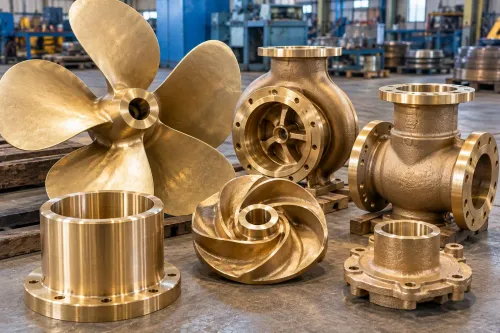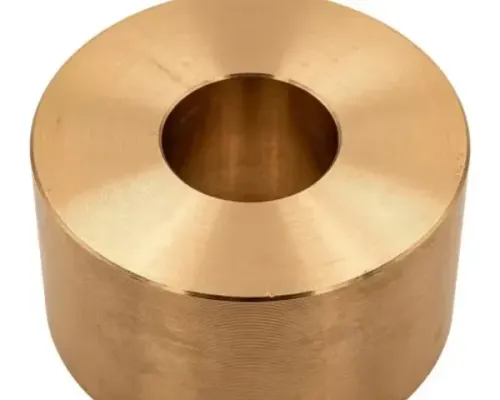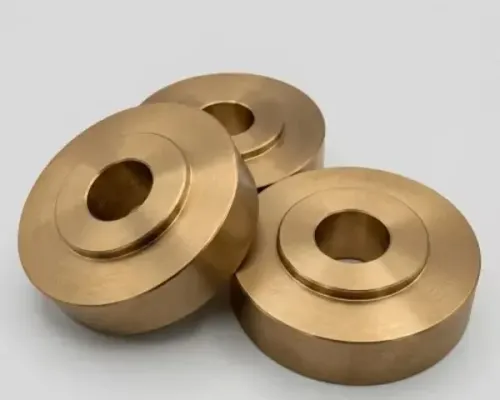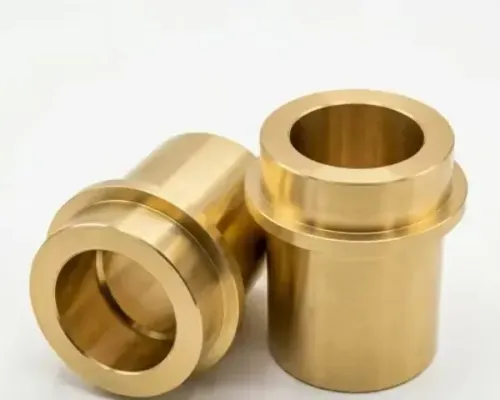
The purchase price of aluminium bronze can look high beside steel, brass, polymers or stainless steel, but the cheapest bar is not always the cheapest finished part. You will be able to compare material, machining, service-life and supplier risks using a complete specification and a Delhi quotation that exposes every cost.
Key takeaways
- Choose aluminium bronze when wear, load or seawater makes failure expensive.
- Compare grade, temper, certification and machining allowance—not diameter alone.
- Calculate total service cost instead of comparing rupees per kilogram.
- Request chemistry, dimensions, test reports and traceability before purchase.
When the higher alloy cost pays for itself
A higher purchase price pays for itself when the alloy prevents a failure that costs more than the material premium. Aluminium bronze earns that premium where high load, adhesive wear, seawater exposure or contaminated lubrication would shorten the life of a cheaper steel, brass or polymer part.
It is not automatically the best choice: mating-shaft material, load, speed, lubrication and temperature decide whether its wear resistance matters.
For aluminium bronze round bar applications, compare the complete part cost rather than rupees per kilogram:
- Use aluminium bronze when galling, corrosion or repeated replacement threatens production uptime.
- Reject the premium when the part carries light loads in a clean, well-lubricated environment and a lower-cost material already meets its fatigue and wear requirements.
- Treat a C95400 cast round differently from a wrought bar; segregation, porosity and machining allowance can change scrap and machining costs.
The strongest business case appears when the part is difficult to access, expensive to replace or capable of damaging a mating component after failure. A longer service interval can outweigh a higher bar price, but only after checking fatigue, contact stress, corrosion, temperature and machining marks—not tensile strength alone.
Request a quotation against the exact grade, diameter, length, route, condition, tolerance, testing, GST, freight and delivery basis; “aluminium bronze” alone cannot support a reliable comparison.
What actually determines the Delhi quotation
An aluminium bronze round bar quotation in Delhi is comparable only after you lock the grade, route, size, quantity and delivered basis. “Aluminium bronze” alone hides differences large enough to make the cheaper offer unsuitable for a machinery part.
Before comparing the aluminium bronze round bar price for machinery parts in Delhi, put these controls on every request:
- State the UNS grade, such as C95400 or C63000, and the required condition or temper.
- Specify diameter, cut length, diameter tolerance, straightness and machining allowance.
- Identify the manufacturing route: cast, centrifugally cast, forged, rolled or extruded.
- Request heat or cast-number traceability, chemical analysis, mechanical tests and dimensional inspection.
- Separate material price from GST, freight, packing, delivery location, lead time and payment terms.
| Quotation control | Specify | Why it changes comparison |
|---|---|---|
| Grade and standard | C95400 to ASTM B148, or wrought bar to ASTM B150/B150M | Cast and wrought products are not interchangeable |
| Product form | Primary wrought bar or cast-and-machined round stock | Grain structure, porosity risk and machining allowance differ |
| Commercial basis | Ex-works or delivered Delhi, GST included or excluded | A low kilogram rate can become the higher landed cost |
| Inspection | Certificate, hardness, dimensions and internal-defect acceptance | Bright surface appearance does not prove sound material |
A supplier described as an aluminium bronze round bar manufacturer India may supply either route. Confirm the form before accepting the quotation.
Choose the grade and product form before the diameter
AB1 and AB2 are cast-alloy designations, so do not compare them with wrought C63000 on chemistry alone. Confirm the governing standard because AB1 and AB2 naming varies between specifications; ask for the exact chemical limits, mechanical requirements and casting route before choosing a diameter.
| Grade or form | Route and standard | Best fit |
|---|---|---|
| AB1 | Cast aluminium bronze; specify the applicable foundry standard | General bushings, gears and wear parts where moderate strength is adequate |
| AB2 | Nickel-iron aluminium bronze cast grade; verify the standard and chemistry | Heavier loads, marine exposure and components needing higher strength |
| C95400 | Cast CuAl10Fe3 under ASTM B148 | Machined cast rounds, bearings, valve parts and wear-resistant machinery components |
| Wrought aluminium bronze, such as C63000/CuAl10Ni5Fe4 | Bar under ASTM B150/B150M; specify temper | Shafts, pins and precision parts needing consistent grain structure and predictable machining |
A cast-and-machined round is not equivalent to primary wrought bar. Casting can introduce segregation, inclusions or porosity that turning exposes, while wrought bar can offer more uniform structure but cost more and limit available diameters.
Once the form and grade are fixed, specify:
- Nominal diameter, cut length, tolerance and straightness
- Temper or supplied condition, heat or cast number, and certificate type
- Chemical analysis, hardness and mechanical tests required by the drawing
- Machining allowance and inspection acceptance criteria
A listing that says “aluminium bronze round bar manufacturer india” proves nothing about product form. Ask whether the supplier rolls, extrudes, forges, centrifugally casts or machines cast stock before comparing its quotation.
Calculate machining and service cost, not just rupees per kilogram
A ₹/kg comparison misses the real cost of a machinery part. Calculate total cost as material, machining time, tooling wear, scrap, inspection, maintenance and the interval before replacement.
For each manufacturing route, record:
- Material cost: include the purchased blank, machining allowance and freight, GST and rejected pieces.
- Machining cost: multiply cycle time by the machine-hour rate, then add setup, drilling, boring and finishing operations.
- Scrap cost: bar stock can lose a large share of its mass as chips; a near-net casting reduces removal but adds pattern, gating, riser and inspection costs.
- Tooling cost: aluminium bronze can increase insert wear and demand suitable cutting speeds, coolant and chip control. A difficult grade or interrupted cut raises tool changes.
- Quality cost: a cast bar can reveal segregation, inclusions or porosity only after turning, wasting labour and stock.
An aluminium bronze bar for machining suits repeatable dimensions and moderate-to-high volumes when the supplier controls soundness. A centrifugal or sand casting can cost less per finished part for large diameters or complex shapes, but include pattern amortisation, machining allowance and defect risk. Compare both routes at your annual quantity, not at one piece.
Ask Kamal Deep Metal Works Pvt Ltd whether the quotation covers cast-and-machined stock or wrought bar, and request the allowance, inspection scope and replacement terms in writing. Finally, divide annual maintenance and downtime cost by the expected service interval; a costlier part that lasts twice as long may be the cheaper choice.
Related products
 | Aluminium Bronze Grade AB1 Product Type Ring Weight Per Piece 1 - 10 kg Casting Method Centrifugal Usage/Application Marine Hardware Standard ASTM B148 Finish As Cast... View product → |
 | Aluminium Bronze Aluminium Bronze for Heavy Duty Applications Alloy Grade AB2 Aluminium Content 10–12% Al Product Type Bearing Casting Process Centrifugal Cast Application Marine Nickel Content 3–5% Ni Finish... View product → |
The supplier checks that protect the purchase
Do not compare quotations until the aluminium bronze round bar supplier in Delhi identifies exactly what will be delivered. “Aluminium bronze” alone cannot distinguish wrought C63000 (CuAl10Ni5Fe4) from cast C95400 (CuAl10Fe3), and their certificates, defect limits and design properties are not interchangeable.
- Ask for the UNS grade, temper or condition, diameter, tolerance, straightness limit and supplied length.
- Require a certificate linking each bar to its heat number or cast number, with the chemical analysis for aluminium, copper, iron, nickel and other specified elements.
- Confirm whether the bar is cast, centrifugally cast, forged, rolled or extruded, and request the applicable product standard.
- Obtain mechanical-test results when the specification calls for them, including tensile strength, yield strength, elongation and hardness.
- Request a dimensional inspection record covering diameter, ovality, straightness and cut length.
- Define the acceptance method for porosity, inclusions, segregation and surface cracks; a bright, polished bar proves none of its internal soundness.
- Check available stock, production lead time, packing, dispatch documents and the supplier’s replacement process for nonconforming material.
Match every certificate to the delivered heat or cast number, not merely to the invoice. If the supplier offers a machined cast round as “bar,” record that product form because machining allowance, grain structure and defect exposure change the part’s risk.
Frequently asked questions
When does aluminium bronze justify its higher alloy cost?
It earns the premium when high load, adhesive wear, seawater exposure or contaminated lubrication would shorten the life of steel, brass or polymer parts.
What determines an aluminium bronze round bar quotation in Delhi?
The quotation depends on alloy grade, diameter, length, quantity, manufacturing route, tolerances, machining allowance, testing, documentation, freight and taxes.
Should you choose the alloy grade before the bar diameter?
Yes. Select the grade and product form for the load, wear, corrosion and machining conditions, then specify the diameter and allowance needed for the finished part.
How should you compare aluminium bronze bar for machining?
Include purchase price, material removed, tooling, cutting time, inspection, downtime, replacement frequency and expected service life—not only the price per kilogram.
What should you verify with an aluminium bronze round bar supplier in Delhi?
Request the stated grade, chemical analysis, dimensions, manufacturing route, heat or batch number, test reports, surface condition, tolerances and traceability documents.
Keywords