Choosing manganese bronze by name alone can produce a component with the wrong load capacity, wear behaviour, casting method or inspection level. By the end, you will be able to compare grades, match them to service conditions, write a complete casting enquiry and evaluate supplier evidence before approving production.
Key takeaways
- Start with the UNS alloy grade, not the trade name.
- Match C86300 or another grade to load, motion and chemical exposure.
- Choose sand or centrifugal casting from geometry, size and production volume.
- Approve a first article only after reviewing defects, dimensions and test records.
Start with the alloy grade, not the trade name
“Manganese bronze” is not a purchase specification. Select the UNS alloy grade from the component’s load, wear and corrosion requirements, then name the casting standard and process. For many high-strength bushings, gears and valve parts, C86300 is the starting candidate; do not substitute C86500 because a supplier calls both manganese bronze.
| Grade | Typical reason to consider it | Specification to identify |
|---|---|---|
| C86300 | High-strength, wear-resistant components such as gears, bushings and valve parts | UNS C86300, ASTM B584 for sand casting or ASTM B271 for centrifugal casting |
| C86500 | Heavy-duty manganese-bronze parts where the approved design calls for this grade’s certified properties | UNS C86500 plus ASTM B584 or ASTM B271, as applicable |
| Other manganese-bronze grade | A replacement or legacy component with an existing material requirement | Exact UNS designation, standard, temper or heat treatment, and certified mechanical properties |
Put this information on the drawing or purchase order:
- UNS grade, not only the trade name “manganese bronze”
- ASTM B584 for sand castings or ASTM B271 for centrifugal castings
- Required tensile strength, yield strength, elongation and hardness from the selected grade and standard
- Chemical composition limits and heat or batch traceability
- Casting condition, heat treatment and any approved repair limits
- Finished dimensions, machining allowance and inspection method for bores, bearing seats, gear faces and flange faces
A quotation saying “as per ASTM” is incomplete. It must state the alloy grade, casting process, standard and acceptance requirements so manganese bronze casting options can be compared on an equal basis.
Match the alloy to load, motion and chemical exposure
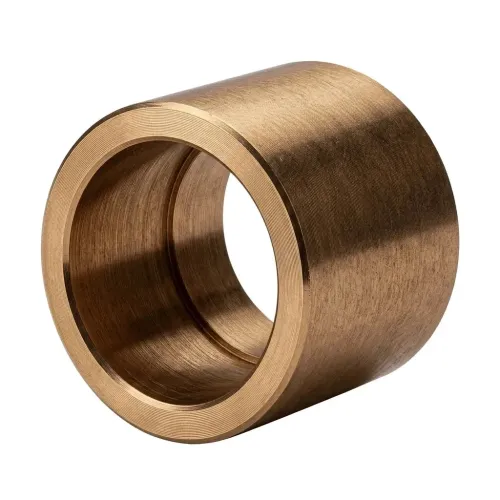
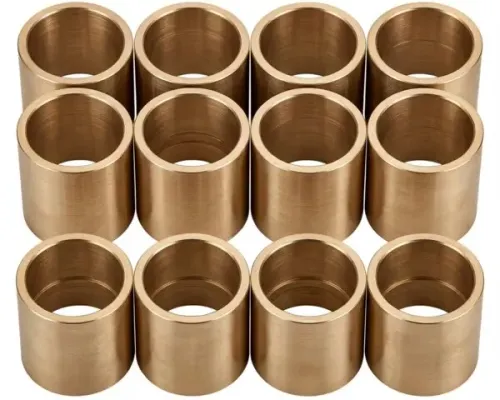
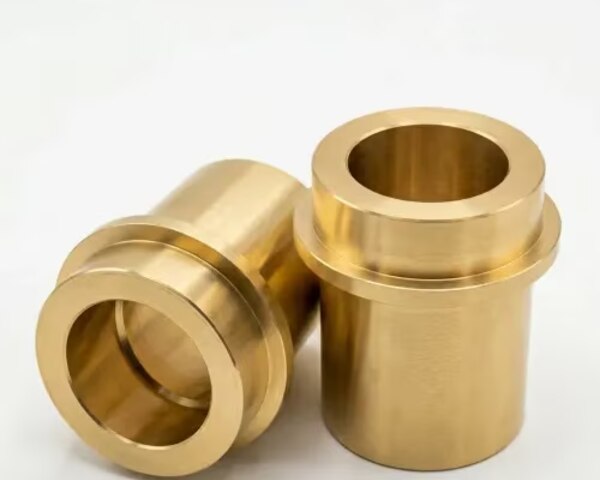
Select manganese bronze when the part carries high pressure, intermittent shock and moderate sliding motion, yet needs better corrosion resistance than steel. It suits bushings, worm wheels, thrust washers, valve stems and heavy-duty gears where lubrication is reliable and the mating shaft is harder than the bronze.
It is not a universal wear alloy: abrasive grit, dry running and sustained high temperature can destroy the advantage.
| Component condition | Manganese bronze is suitable when | Choose instead when |
|---|---|---|
| Bushings and thrust washers | Loads are high, sliding speed is moderate, lubrication is maintained, and corrosion exposure is present | Choose tin bronze for stronger anti-seizing behaviour, or hardened steel with a replaceable bearing for extreme pressure |
| Worm wheels and gears | You need shock tolerance, lower shaft wear and corrosion resistance | Choose steel for very high torque, surface hardness or severe abrasive contamination |
| Valve and pump parts | The fluid is non-oxidising and the temperature remains within the alloy’s specified service limit | Choose aluminium bronze for seawater and erosion, or stainless steel for chemicals that attack copper alloys |
| Heavy structural wear parts | Impact is significant but abrasive particles are controlled | Choose alloy steel or cast iron for extreme abrasion, higher hardness or lower material cost |
Do not choose manganese bronze for dry sliding, electrical-conductivity duties, concentrated acids, ammoniacal chemicals or temperatures that reduce its strength. Check galvanic contact as well: pairing it with stainless steel or aluminium in a wet electrolyte can accelerate attack unless the joint is isolated.
For manganese bronze components in India, provide load, speed, lubricant, temperature, contaminant and chemical-medium data before requesting a quote; those inputs determine whether bronze, aluminium bronze or ferrous material is the safer choice.
Choose sand or centrifugal casting from the component geometry
For a rotationally symmetric sleeve, ring, bush or bearing shell, centrifugal casting usually gives the best balance of soundness and material efficiency. It produces a relatively sound wall with fewer large shrinkage cavities, but it does not automatically deliver finished dimensions without machining.
| Process | Geometry and quantity | Soundness and control | Cost implication |
|---|---|---|---|
| Sand casting | Complex housings, bosses, passages, cores, one-off or low-volume parts | Flexible geometry; dimensional control depends on pattern, mould and core accuracy | Lower tooling cost; economical for varied shapes |
| Centrifugal casting | Rotationally symmetric tubes, rings, sleeves and thick-wall shells; repeat batches | Strong wall quality and consistent bore after machining; unsuitable geometry can create defects | Higher process constraint; attractive when quantity justifies dedicated tooling and machining |
Choose sand casting when the drawing contains external bosses, non-concentric features, internal passages or several core-supported cavities. Forcing such a part into centrifugal production can add plugs, machining and handling that erase the process advantage.
Choose centrifugal casting when the required shape is fundamentally tubular and the production quantity supports repeatable setup. For a low-volume replacement part, sand casting usually wins on total cost because pattern and mould changes are simpler.
State the process in the enquiry, not just “manganese bronze casting.” Check sand-cast requirements under ASTM B584 and centrifugal requirements under ASTM B271. The quotation must name the alloy grade, casting process and acceptance class; “as per ASTM” is incomplete.
Specify rough and finished dimensions, machining allowance, bore concentricity, inspection method and production quantity before comparing prices.
Specify the casting so defects and hidden costs are controlled
A custom manganese bronze casting enquiry needs enough information to price the finished component, not just the alloy. State the UNS grade, such as C86300 or C86500, and name the applicable standard: ASTM B584 for sand castings or ASTM B271 for centrifugal castings. “As per ASTM” is incomplete.
Include these technical inputs:
- 3D model or fully dimensioned drawing, drawing revision, rough and finished dimensions, estimated casting weight, section thicknesses and core requirements
- Service load, shaft speed, lubrication method, operating temperature, corrosion medium, required service life and delivery quantity
- Machining datums, machining allowances, critical tolerances and the surfaces requiring finish machining
- Pattern or tooling expectations, including ownership, storage, modification charges and approval of the first article
Control functional surfaces rather than applying one blanket casting tolerance. Bores, bearing seats, gear faces and flange faces need defined machining allowances and inspection methods; shrinkage, core movement and section changes can otherwise create rework or an unusable casting.
Specify inspection acceptance in measurable terms. Name the sampling level, dimensional report, chemical certificate, hardness or mechanical tests, and any radiographic or ultrasonic testing. For NDT, state inspection locations, method, calibration reference and rejection limits; a polished surface does not prove internal soundness.
Request a quotation that separates casting, tooling, cores, machining, testing, packing, transport, taxes and lead time. Require written approval for drawing changes, repair welding, substitutions and nonconforming material. This exposes costs that a low casting price hides.
Audit the supplier before approving the first article
Do not approve a quote because the alloy price is competitive. Compare a manganese bronze casting supplier in Delhi with suppliers elsewhere in India on the evidence that predicts repeatable finished parts: matching alloy heats, casting route, maximum envelope, core control, machining and inspection capacity.
For imported-equipment replacement parts, delivery distance matters less than traceability and corrective action.
| Capability | Delhi supplier | Supplier elsewhere in India |
|---|---|---|
| Pouring range | Confirm maximum pour weight, diameter and length | Confirm the same limits, not catalogue capacity |
| Process control | Review sand or centrifugal process records and pattern history | Request equivalent records from the actual production site |
| Inspection access | Verify radiography or ultrasonic testing, calibration and reports | Verify the named laboratory, method and rejection limits |
| Delivery risk | Check transport time and protection against distortion | Check freight time, packaging and replacement-part response |
Ask for these records before approving the first article:
- Two or more previous heats of the specified grade, with heat numbers, chemistry and mechanical-test results.
- A controlled pattern drawing showing shrinkage allowance, parting line, cores and revision history.
- A sample-section approval for critical bores, bearing seats, gear faces and flange faces.
- A first-article report comparing rough and machined dimensions against functional datums.
- A corrective-action report showing how the foundry handled porosity, inclusions or core movement.
Kamal Deep Metal Works Pvt Ltd should be compared on this same evidence, not on photographs of large castings or a quotation marked only “as per ASTM.” Require ASTM B584 for sand castings or ASTM B271 for centrifugal castings, with the alloy grade, acceptance class and inspection locations stated.
Related product
 | Brass Sand Casting Manufacturer in India – Kamal Deep Metal Works In the world of industrial engineering and heavy machinery, the quality of metal components plays a... View product → |
Frequently asked questions
Why should you select the UNS alloy grade instead of a trade name?
Trade names can cover different compositions and properties. Specify the UNS grade, such as C86300, alongside the casting standard and process.
How do you match manganese bronze to a heavy-machinery application?
Assess load, sliding or oscillating motion, wear, corrosion, lubrication and temperature before choosing the alloy grade.
When should you choose sand casting or centrifugal casting?
Choose the process from the component’s geometry, wall thickness, size, required soundness, machining allowance and production quantity.
What should a manganese bronze casting specification include?
State the UNS grade, casting process, dimensions, tolerances, machining allowance, inspection requirements, acceptance criteria and traceability documents.
How do you audit a manganese bronze casting supplier?
Review alloy control, melting records, moulding capability, non-destructive testing, machining capacity, corrective-action records and first-article inspection results.
Keywords