A C95800 casting is not confirmed by the words “aluminium bronze” or “marine bronze” on a quotation. You will be able to verify the alloy, casting standard, mechanical evidence, marine-service suitability, inspection scope and true delivered cost before comparing a Delhi supplier with other foundries.
Key takeaways
- Verify ASTM B148, heat chemistry and mechanical test records before ordering.
- C95800 is not interchangeable with C95400 or C95500 in marine service.
- Choose centrifugal casting for dense cylindrical parts and sand casting for complex shapes.
- Compare machining, inspection, packaging and rejection costs—not only the quoted casting price.
What UNS C95800 is—and why C95400 or C95500 is not an equivalent
A genuine UNS C95800 quotation names the alloy as cast nickel-aluminium bronze and identifies ASTM B148 as the product standard. Its heat analysis must show 8.5–10.5% aluminium, 3.0–5.0% iron, 4.0–5.5% nickel, 1.0–2.0% manganese and no more than 0.5% zinc, with copper making up the balance.
ASTM B150 describes wrought products, not proof of a C95800 casting.
| Grade | What it is | Why it is not interchangeable with C95800 |
|---|---|---|
| C95800 | Nickel-aluminium bronze with defined nickel, iron and manganese levels | The chemistry and casting designation support marine strength, corrosion resistance and cavitation performance |
| C95400 | Aluminium-iron bronze with a different alloy balance | Its nickel content and microstructure do not establish C95800 compliance |
| C95500 | Nickel-aluminium bronze with its own aluminium, nickel, iron and manganese limits | Similar alloy family does not make its chemistry or properties equivalent |
Ask a C95800 marine bronze supplier for these records before accepting the offer:
- The quotation must state UNS C95800, ASTM B148 and the casting condition, not only “marine bronze,” “gunmetal” or “naval brass.”
- The certificate must show the heat number and laboratory heat analysis against every ASTM B148 element limit.
- The heat number on the certificate must match the casting marking, inspection report and delivery documents.
- Reject a quotation that lists C95400, C95500, AB1 or AB2 in its chemistry table while using C95800 in the title.
The chemistry, standard and test records a compliant C95800 casting needs
A compliant C95800 aluminium bronze casting needs three linked records: heat chemistry, mechanical test results and product-standard compliance. A certificate that says only “marine bronze” or “C95800” does not prove the casting meets ASTM B148.
| Document | Required entry | What it proves |
|---|---|---|
| Heat-analysis certificate | Heat number; Al 8.5–10.5%; Fe 3.0–5.0%; Ni 4.0–5.5%; Mn 1.0–2.0%; Zn maximum 0.5%; copper balance | The melt matches UNS C95800 chemistry |
| Mechanical test report | Tensile strength about 95 ksi (655 MPa), yield strength about 40 ksi (275 MPa), elongation about 20%, and hardness around 170 HB when specified | The actual heat and test coupon meet the ordered mechanical requirement |
| Product certificate | ASTM B148, UNS C95800, sand-cast condition, heat-treatment condition where applicable, casting identification and heat number | The casting standard and traceability are defined |
| Inspection dossier | Dimensions, NDT results, pressure-test result where required, and approved repair-welding record | The finished part meets the purchase-order acceptance criteria |
Ask the supplier to link every report to the same heat number and casting identification. Require the tensile-test location, coupon type and section thickness; published reference values cannot replace results from the supplied casting.
For a valve body, pump component or other pressure boundary, state ASTM B148 in the purchase order and specify radiography or another NDT method, pressure testing, dimensional tolerances and repair-welding limits. ASTM B150 or IS 305 cannot be treated as automatic substitutes for the named cast-product requirement.
Choosing C95800 for seawater valves, pumps, bearings and ship hardware
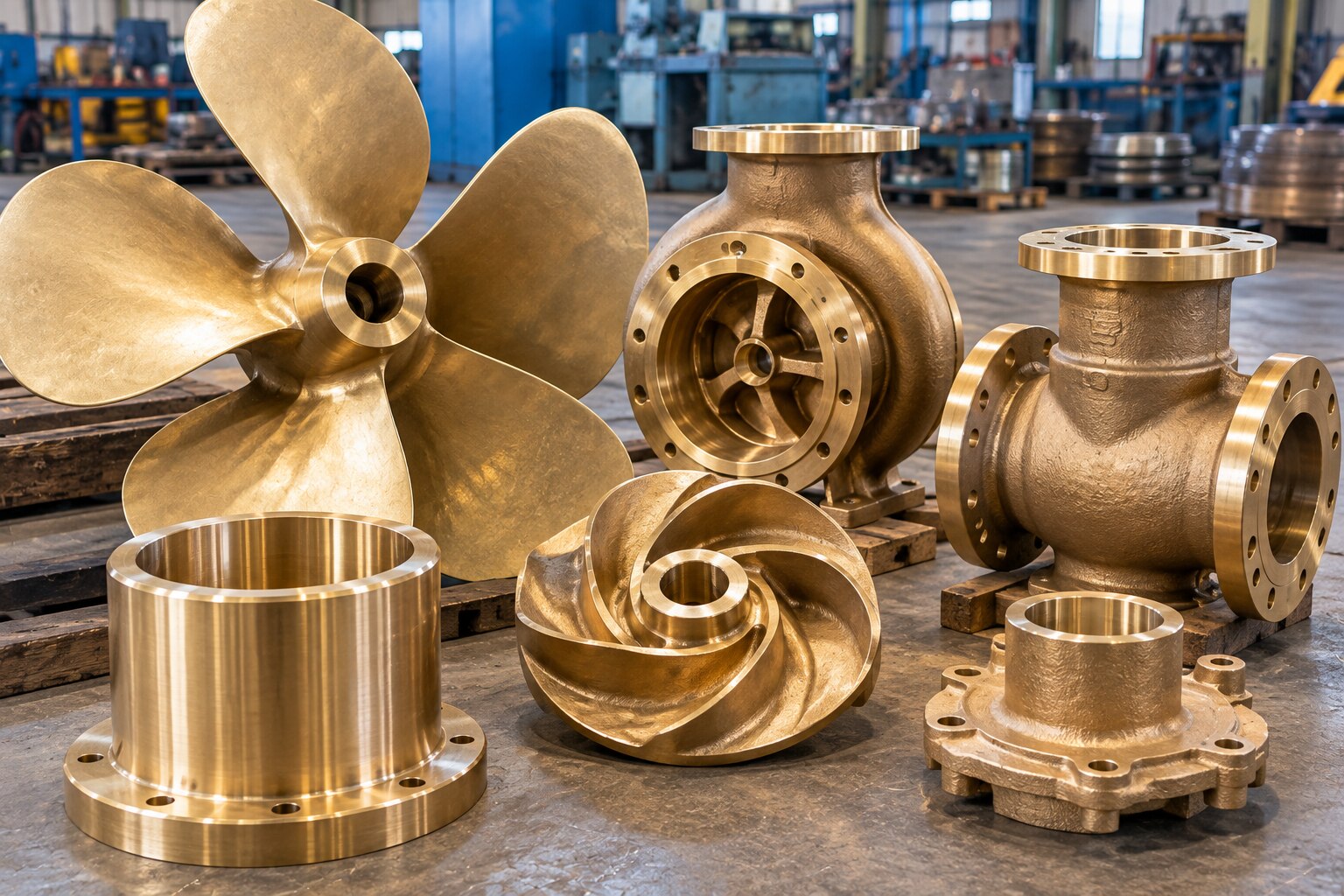
Choose C95800 when a seawater component needs high strength plus resistance to corrosion, erosion-corrosion and cavitation. Its nickel-aluminium-bronze structure suits valve bodies, pump parts, bearings, stems, shafts, propeller-related hardware and submerged fittings exposed to moving seawater.
| Option | Engineering advantage | When it applies |
|---|---|---|
| C95800 | Strong nickel-aluminium-bronze cast alloy with good seawater, erosion and cavitation resistance | Pressure-containing valves, pumps and heavily loaded marine parts |
| C95400 | Aluminium bronze with good strength and wear resistance, but less nickel-assisted seawater performance | General wear parts or less aggressive water service |
| C95500 | Higher-strength aluminium bronze option for demanding loads | Use when its specified strength and casting standard match the design |
| Stainless steel | High strength and familiar fabrication route, but pitting, crevice corrosion and galvanic attack remain risks | Choose after checking chloride grade, oxygen conditions and dissimilar-metal contact |
| Gunmetal or other bronze | Easier casting and useful general corrosion resistance, but lower strength or cavitation resistance | Low-to-moderate loads without severe velocity or impact |
C95800 is not automatically the best choice. Stagnant, sulfide-contaminated or poorly oxygenated seawater can cause selective attack, while crevices, deposits and unsuitable galvanic couples increase risk. Control flow velocity, surface finish, chlorination and mating materials before approving the alloy.
Ask a C95800 marine bronze supplier to compare the actual environment, not just the alloy name. Select C95800 over C95400 or gunmetal when cavitation, pressure loading and seawater velocity dominate; select stainless steel when fabrication, cleanliness or chemical exposure makes aluminium bronze unsuitable.
Centrifugal or sand casting: design limits, defects and inspection acceptance
A C95800 aluminium bronze casting for a pressure-containing valve or pump body should normally be specified as sand cast to ASTM B148. Use centrifugal casting for rings, sleeves and cylindrical parts only when the geometry, wall thickness and applicable centrifugal-casting standard are stated; ASTM B271 may apply. “C95800” alone is incomplete.
1. Put the process, UNS C95800, ASTM product standard, temper or heat-treatment condition, and maximum finished dimensions on the purchase order. Mark the drawing with datums, as-cast surfaces, finished surfaces, wall thicknesses and all machining dimensions.
2. Show machining allowance in millimetres for every face requiring machining. Base it on section size, casting method and the foundry’s approved capability; a blanket allowance can leave shrinkage cavities exposed or waste metal and machining time.
3. Require a documented melting and pouring practice, mould and riser design review, temperature records, heat-number traceability and visual acceptance criteria. Control oxide-film entrainment, shrinkage porosity, gas porosity, inclusions, hot tears and abnormal microstructure. State whether repair welding is prohibited or limited to named areas, procedures and approval records.
4. Define NDT by location and method: liquid penetrant testing under ASTM E1417/E1417M for machined or accessible surfaces, radiography for volumetric defects in pressure-critical sections, and ultrasonic testing for suitable thick sections after confirming attenuation limits.
5. State the acceptance level, not merely “sound casting.” Add dimensional inspection, material certificates, repair maps and the specified hydrostatic or functional pressure test; API 598 applies where the valve purchase standard invokes it.
Keep subcontracted machining and NDT under the supplier’s heat-number traceability and final acceptance file. Confirm the Delhi manufacturing address, foundry process, maximum casting envelope and melting capacity rather than assuming a supplier shipping into Delhi produced the casting.
How to compare a C95800 supplier in Delhi and calculate the real price
Verify the exact grade, manufacturing location and delivered scope before comparing quotations. A genuine C95800 aluminium bronze for casting supplier in Delhi should show UNS C95800 on the heat-analysis certificate and identify ASTM B148, not rely on “marine bronze,” AB2 or “naval brass.”
Ask the supplier for:
- Foundry address, casting process, maximum casting envelope and melting capacity
- Heat number, ASTM B148 chemistry, mechanical-test report and traceability from melt to finished part
- Drawing review covering service medium, temperature, pressure or rotational duty, tolerances and machining allowance
- NDT method and acceptance level, pressure-test requirement, inspection location and documentation package
- Confirmation of who performs machining, radiography, dimensional inspection and packing, including subcontractor traceability
Kamal Deep Metal Works Pvt Ltd is one Delhi supplier you can ask to reconcile any catalogue grade, standard and process mismatch before treating its quotation as comparable.
| Quote basis | What the C95800 aluminium bronze price includes | Comparison risk |
|---|---|---|
| Poured-metal kilogram | Metal charged and cast before yield loss | Excludes casting yield, pattern, heat treatment and inspection |
| Accepted net casting | Conforming casting at agreed weight and dimensions | Check return scrap, machining allowance, NDT, packing, freight and taxes |
| Finished machined part | Machining, final inspection and specified tests | Confirm datums, tolerances, surface finish and tool-related charges |
Compare copper, nickel and aluminium assumptions, tooling, melting, heat treatment, machining, NDT, packing, Delhi freight and GST line by line. A low price based on poured metal is not cheaper than a tested, machined part price.
Related product
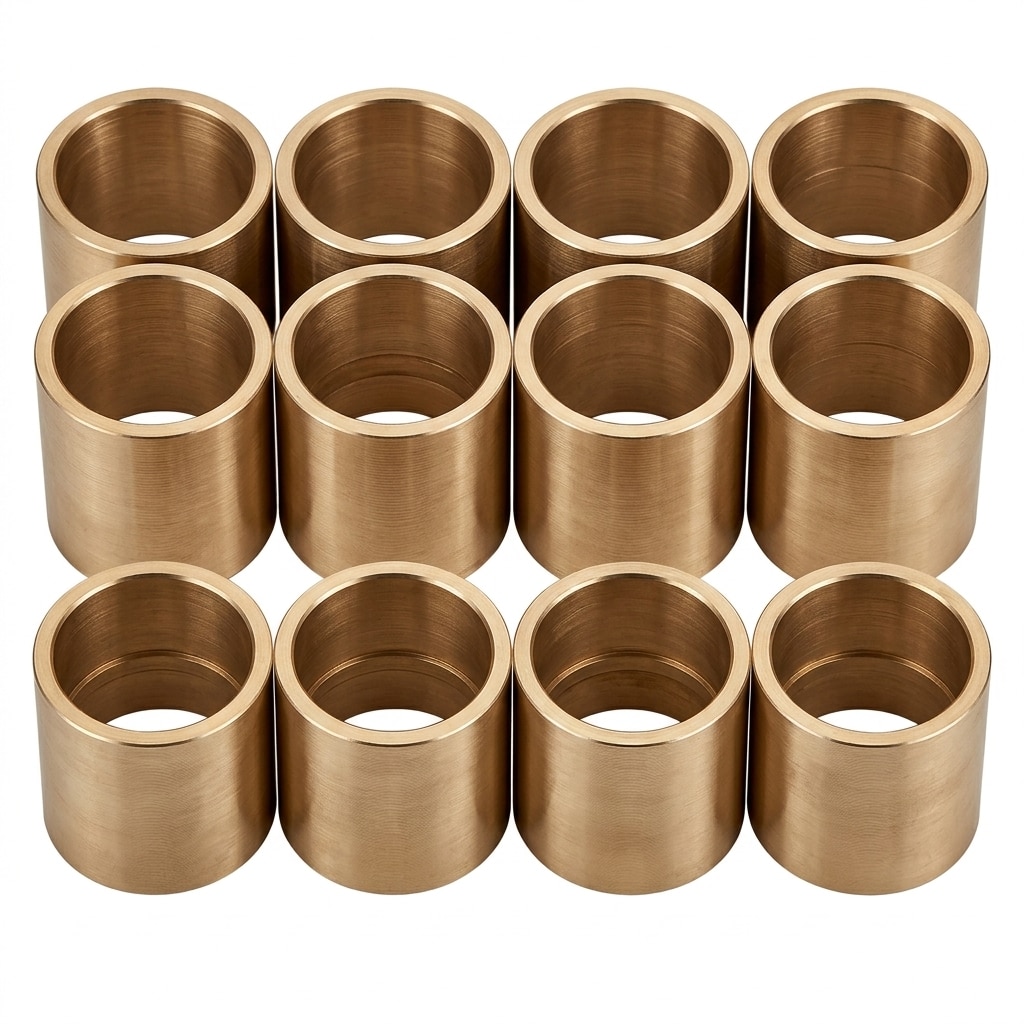 | Aluminium Bronze Alloy Grade C95400 Aluminium Content 10–12% Al Product Type Bearing Casting Process Centrifugal Cast Application Marine Nickel Content 3–5% Ni Finish... View product → |
Frequently asked questions
What is the difference between UNS C95800, C95400 and C95500 aluminium bronze?
UNS C95800 is nickel-aluminium bronze with defined aluminium, iron, nickel and manganese ranges under ASTM B148. C95400 and C95500 have different alloy chemistries and performance characteristics, so they are not equivalent substitutions without engineering approval.
What records should accompany a compliant C95800 casting?
Request the ASTM B148 grade designation, heat analysis, heat or batch number, mechanical test results, casting process, dimensions, inspection results and traceability documents. Check the chemistry against the specified C95800 ranges.
When should you choose centrifugal casting instead of sand casting for C95800?
Choose centrifugal casting for suitable rotational parts such as sleeves, rings and some bearing components when dense, sound metal is the priority. Choose sand casting for complex valve bodies, pump housings and ship hardware that cannot be produced as rotational shapes.
How should you compare C95800 casting suppliers in Delhi?
Compare the delivered cost, including alloy price, tooling, casting, machining, testing, inspection, packing, transport, lead time and rejection risk. Confirm the supplier can provide ASTM B148 documentation and maintain heat-level traceability.
Keywords