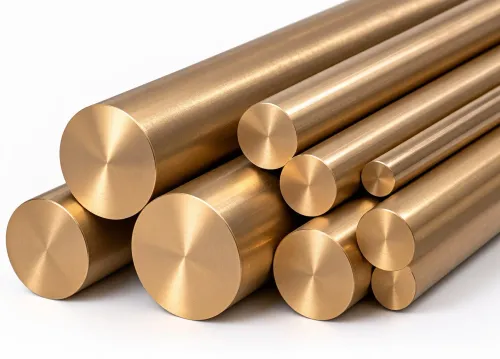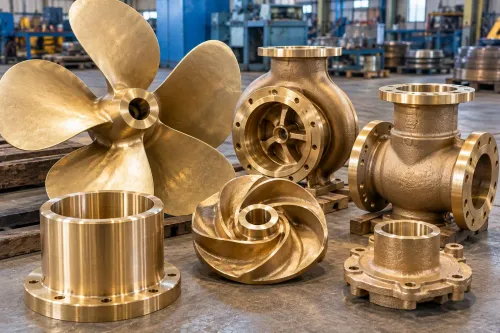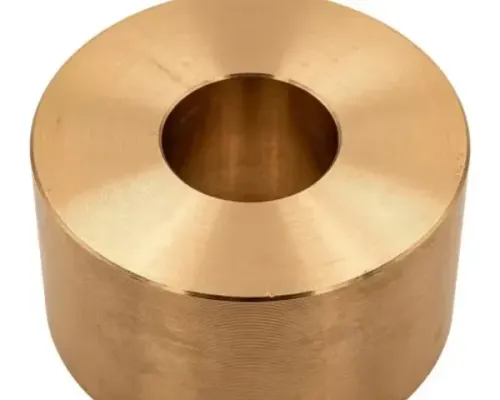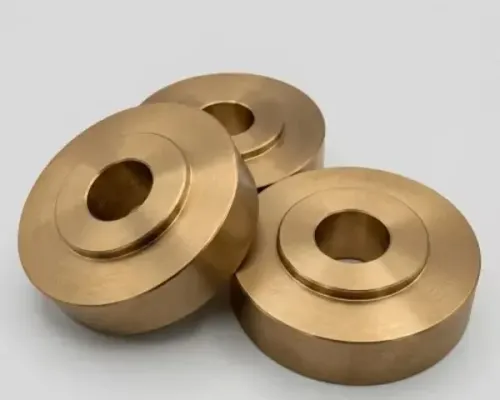
The right copper alloy depends on whether a crusher component carries high pressure and abrasive contamination or needs easy machining and conformability in moderate-duty service. By the end, you will be able to choose between a specified aluminium bronze and a named gun-metal grade, reject unsuitable applications, and prepare a casting specification that addresses inspection, installation and maintenance.
Key takeaways
- Choose aluminium bronze for heavily loaded, abrasive crusher locations.
- Use gun metal for moderate loads where conformability and machinability matter.
- Request alloy grade, hardness, casting method and inspection records.
- Compare suppliers by replacement frequency, machining accuracy and delivered service life.
Aluminium bronze and gun metal are not interchangeable
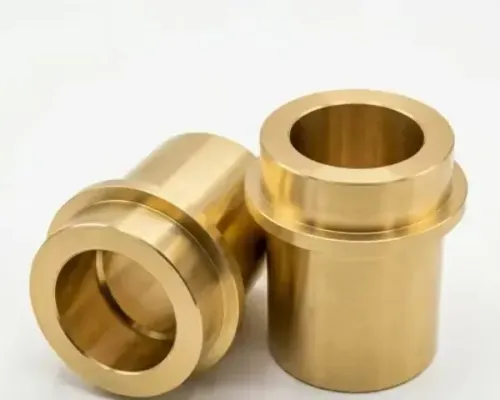
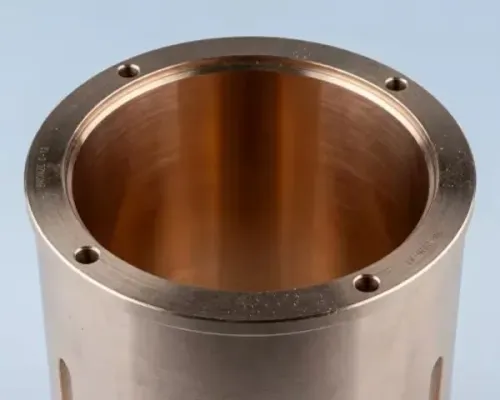
Aluminium bronze usually provides the better combination of strength, hardness, seizure resistance and abrasive-wear resistance for heavily loaded crusher bushes, eccentric bushes, thrust washers and wear rings. Gun metal suits moderate-load bearing service where conformability and machinability matter more than maximum load capacity.
Neither alloy is the normal first choice for a primary jaw or cone crusher mantle, where manganese steel or alloy steel usually handles impact and crushing wear better.
The practical comparison in wear resistant aluminium bronze vs gun metal for crusher parts is service-specific:
| Option | Strength and wear | Bearing behaviour | Typical crusher use |
|---|---|---|---|
| Aluminium bronze | Higher strength and hardness; better resistance to abrasive particles, pounding and seizure | Tolerates high contact pressure and intermittent lubrication, but needs accurate machining and alignment | Aluminium bronze wear parts such as eccentric bushes, bearing bushes, thrust plates and wear rings |
| Gun metal | Softer, more conformable and easier to machine; leaded tin-bronze grades support moderate wear | Good embeddability and sliding performance in clean, lubricated service; weaker under severe shock or contamination | Bearing shells, bushes and thrust washers carrying moderate loads |
Do not rank these alloys by hardness alone. Particle size, mineral hardness, contact pressure, impact, shaft alignment, lubrication and porosity determine the result.
A softer gun-metal bearing can survive with clean oil and a sound shaft, while it can seize quickly in dusty, poorly lubricated service; aluminium bronze is the safer choice when an upset load or abrasive contamination is unavoidable.
Match the alloy to the crusher load and part location
Choose aluminium bronze for crusher parts that carry high contact pressure, face abrasive dust or poor lubrication, or risk seizure during an upset. Choose gun metal where moderate loads, conformability and easy machining matter more than maximum strength.
| Part location | Aluminium bronze | Gun metal |
|---|---|---|
| Bushes and bearing shells | High-load, oscillating or intermittently lubricated bushes; better seizure resistance | Moderate-load, lubricated bushes that need conformability and economical machining |
| Thrust washers | High thrust, abrasive contamination or shock loading | Light-to-moderate thrust with clean lubrication |
| Eccentric components and wear rings | High pressure, repeated movement and misalignment risk | Moderate-duty bearing surfaces with controlled alignment |
| Cheek plates and non-cutting wear plates | Use only when sliding abrasion and impact are within the alloy’s design limits | Use only for light, supported wear; leaded grades lose strength under shock |
For gun metal crusher parts, name the grade rather than writing “gun metal.” A C83600-type leaded tin bronze machines easily and supports sliding, but its lead-rich structure is a poor choice for severe impact or high abrasive loading.
Aluminium bronze, including nickel-aluminium bronze, suits tougher duty, but porosity, counterface damage and frictional heat still determine service life.
Use neither alloy for a primary jaw or cone mantle, liner, or other surface receiving direct crushing impact unless the equipment designer approves it. Choose high-manganese steel or alloy steel when the part must absorb repeated rock impact, resist gouging, or survive severe mineral abrasion.
Specify the casting, hardness and inspection evidence
Do not approve a crusher casting described only as “aluminium bronze” or “gun metal.” State the alloy designation, casting route, heat-treatment condition, mechanical-property minimums, drawing tolerance and acceptance tests on the purchase order.
For aluminium bronze wear parts, C95400 is a practical reference: published typical sand-casting values are about 100 ksi tensile strength, 45 ksi yield strength and 170 HB. C83600, a common leaded tin bronze gun metal, is listed around 35 ksi tensile strength, 15 ksi yield strength and 80 HB.
Treat these as reference values, not guarantees; specify the required condition and test method.
1. Cite ASTM B148 for aluminium-bronze sand castings, ASTM B271 for centrifugal copper-alloy castings, or ASTM B584 for general copper-alloy sand castings. Name whether the part is sand cast or centrifugally cast, and record any required heat treatment.
2. Require a heat-number-linked chemical analysis and a test coupon or representative casting tested for tensile strength, yield strength and Brinell hardness. Cite ASTM E8/E8M for tension testing and ASTM E10 for Brinell testing.
3. Accept dimensions only after machining, including bore size, wall thickness, face runout and concentricity against the approved drawing.
4. Require visual inspection for cracks, shrinkage and exposed porosity, plus sectioning or radiography where section thickness and cyclic loading justify it. Oxide films and entrained inclusions can act as cracks.
5. Demand written disclosure of every weld repair, including maximum repair area, filler, procedure and re-inspection method. Reject undocumented repairs.
Prevent seizure, pounding and premature wear during installation
A shaft that runs tight, off-centre or dry will destroy a sound casting; correct clearance and alignment prevent seizure, pounding and premature wear before the first load reaches the crusher.
Set shaft clearance from the shaft diameter, operating temperature, load and lubricant specified for the assembly. Too little clearance leaves no room for thermal expansion and causes seizure; too much clearance lets the shaft pound the bush and concentrates load at the edge.
For gun metal crusher parts, do not copy an aluminium-bronze fit without checking the grade and duty.
Before commissioning:
- Measure the journal for taper, ovality, burrs and surface damage; polish or repair it before fitting the casting.
- Check the bore after installation, because pressing can distort a bush and close its running clearance.
- Align the shaft, bush and thrust faces; an offset assembly produces one-sided scoring and rapid edge wear.
- Flush abrasive fines, old grease and casting sand from grooves, seals and oil passages.
- Apply the specified clean lubricant, then run at low speed and light load before increasing duty in stages.
Diagnosis must follow the damage pattern. Blue discoloration, smeared metal and a locked shaft indicate frictional overheating or lubricant loss. Dents and circumferential pounding marks indicate excessive clearance or shock loading. One-sided wear points to misalignment; embedded grit points to contamination.
If wear continues after correction, inspect porosity and the counterface before simply choosing a harder alloy.
How to compare Delhi suppliers and calculate the real cost
Send every Delhi supplier the same quotation pack. A vague request for “wear-resistant aluminium bronze” invites different alloys, casting routes and machining allowances, making prices impossible to compare.
- Part drawing with finished dimensions, tolerances, datum references and surface-finish requirements
- Alloy designation, such as C95400 or AB2, plus hardness or tensile-property targets
- Casting method, quantity, batch size, service load, speed, lubrication and mating-shaft material
- Required machining, heat treatment, dimensional inspection and acceptance criteria
- History of cracks, seizure or premature wear, with photographs and the failed part if available
Ask for the heat-number-linked chemical analysis, representative hardness or tensile results, and inspection dimensions after machining. For repairs, require the permitted maximum weld area, filler, welding procedure and re-inspection method; unrevealed weld repairs create a replacement risk.
| Cost item | What to compare | Why it changes the decision |
|---|---|---|
| Purchase price | Casting, pattern, cores and delivery | The lowest quote may omit tooling or freight |
| Machining and inspection | Hours, fixtures, gauging and test reports | Excess stock or poor geometry raises your landed cost |
| Downtime exposure | Delivery lead time and proven repeatability | One failed bush can cost more than the price difference |
| Replacement risk | Traceability, defect history and repair disclosure | Oxide inclusions, shrinkage or hidden welds can trigger repeat failure |
Use the same worksheet for every crusher casting supplier in Delhi. Kamal Deep Metal Works Pvt Ltd belongs on that comparison when its quotation identifies the exact alloy, process and inspection evidence rather than relying on catalogue labels.
Related products
 | Aluminium Bronze Wear Resistant Aluminium Bronze Alloy Grade AB2 Aluminium Content 10–12% Al Product Type Bearing Casting Process Sand Cast Application Marine Nickel Content 3–5% Ni Finish Type As... View product → |
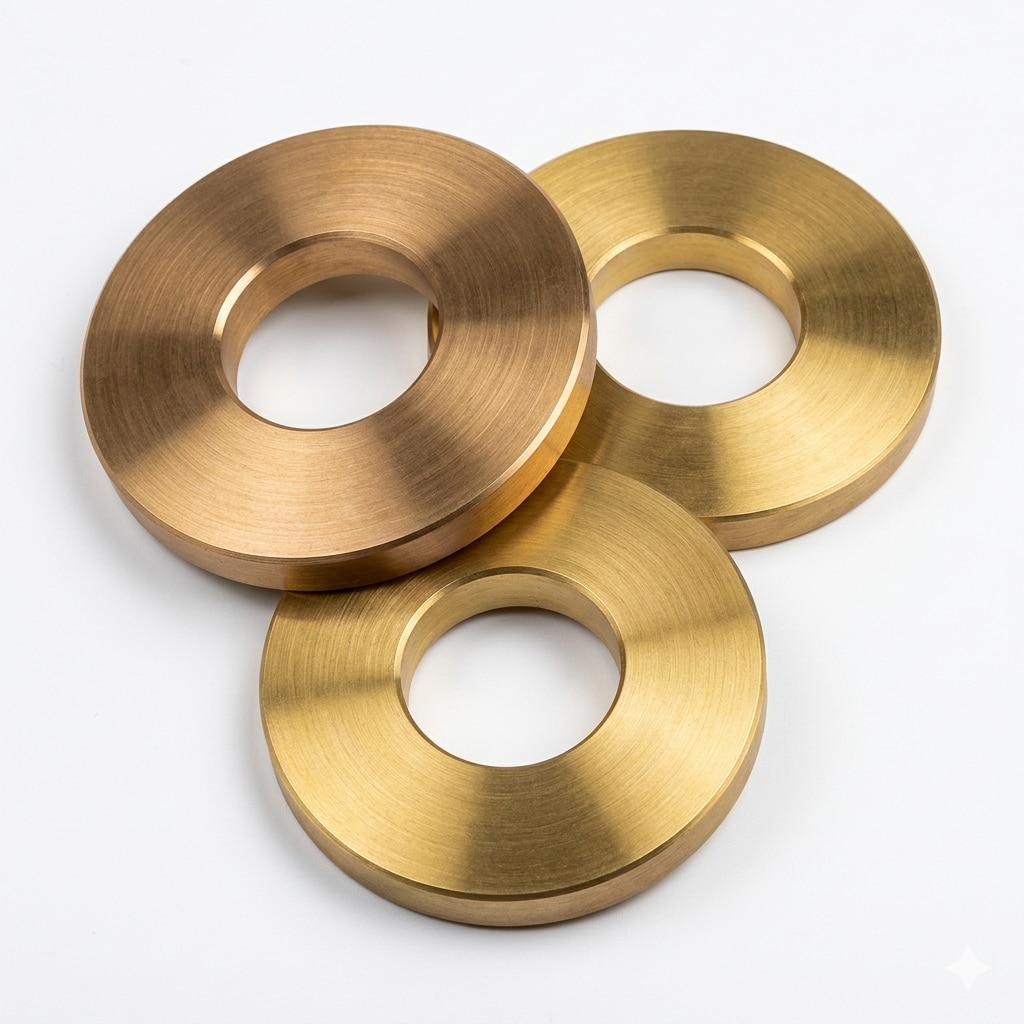 | Aluminium Bronze Alloy Grade C95400 Aluminium Content 10–12% Al Product Type Bearing Casting Process Sand Cast Application Marine Nickel Content 3–5% Ni Finish Type... View product → |
Frequently asked questions
Are aluminium bronze and gun metal interchangeable in crusher parts?
No. Aluminium bronze suits higher loads, seizure risk and abrasive wear, while gun metal suits moderate-load bearing service where conformability and machinability matter more.
Which crusher parts benefit from wear resistant aluminium bronze?
Heavily loaded crusher bushes, eccentric bushes, thrust washers and wear rings are common aluminium bronze applications.
What evidence should you request from a crusher casting supplier in Delhi?
Request the specified alloy grade, casting method, hardness result, dimensional inspection report and evidence of checks for defects such as shrinkage and porosity.
How do you compare Delhi suppliers beyond the casting price?
Compare alloy consistency, machining accuracy, inspection records, lead time, installation support and the expected replacement cost over the part’s service life.
Related products
 | Aluminium Bronze Grade AB1 Product Type Ring Weight Per Piece 1 - 10 kg Casting Method Centrifugal Usage/Application Marine Hardware Standard ASTM B148 Finish As Cast... View product → |
 | Aluminium Bronze Grade AB1 Product Type Ring Weight Per Piece Up to 1 kg Casting Method Centrifugal Usage/Application Marine Hardware Standard ASTM B148 Finish As... View product → |
Keywords