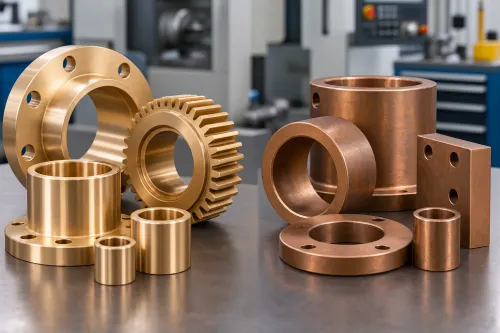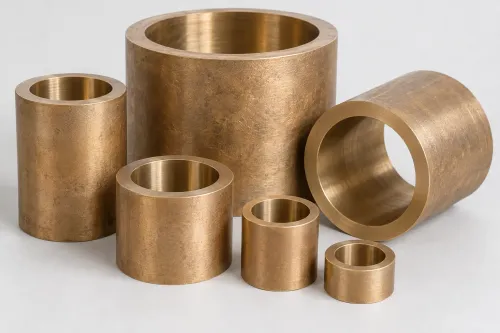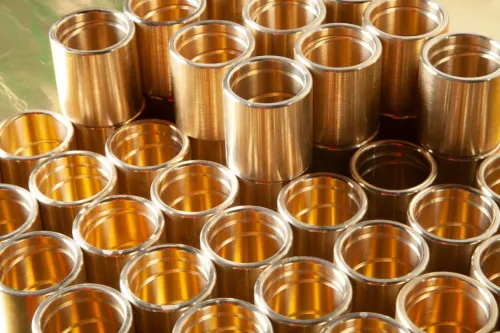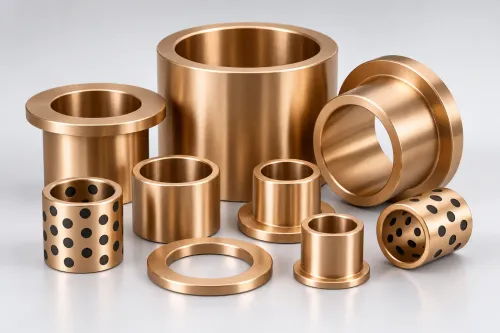
High-temperature machinery can expose metal components to a combination of heat, mechanical stress, oxidation, wear, and dimensional change. Choosing Heat Resistant Aluminium Bronze therefore requires more than finding an alloy with a high temperature figure on a datasheet.
The real question is whether a particular grade can retain the properties needed by the component under its actual operating conditions.
Start With the Real Temperature Profile
Engineers should first distinguish between ambient temperature, normal operating temperature, peak temperature, and transient thermal exposure.
A component continuously operating at an elevated temperature experiences different metallurgical demands from one exposed only to occasional heat spikes.
Before selecting material, establish:
- Continuous operating temperature
- Maximum expected temperature
- Duration of peak exposure
- Heating and cooling cycles
- Mechanical load at temperature
- Surrounding atmosphere
- Lubrication conditions
Without this information, 'heat resistant' is too broad a requirement for reliable material selection.
Why Aluminium Bronze May Be Considered
Certain aluminium bronze compositions provide useful combinations of strength, wear behaviour, oxidation resistance, and corrosion performance.
These characteristics can make suitable grades relevant for demanding industrial parts exposed to elevated temperatures.
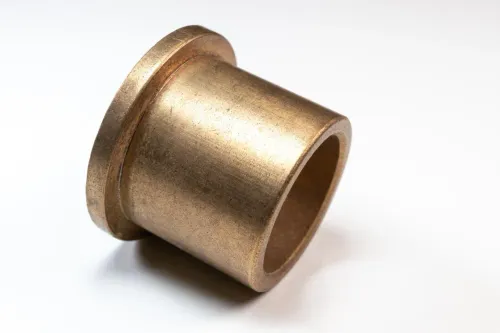
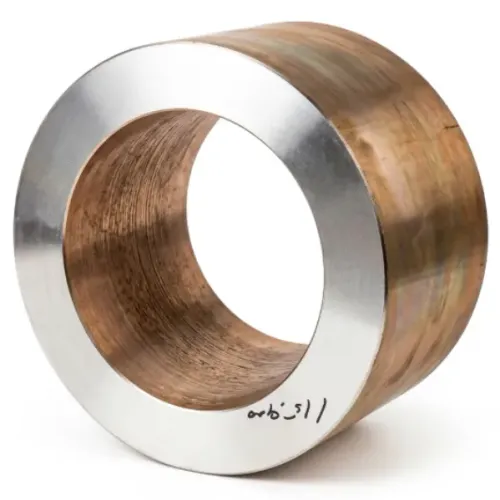
Possible applications can include specialised bushes, wear components, valve parts, machine components, and other engineered castings, depending on the exact grade and service conditions.
Temperature Can Change More Than Strength
When machinery operates at elevated temperature, several related factors may change.
Lubricants can lose effectiveness. Clearances can shift because materials expand at different rates. Oxidation or corrosion behaviour may change. Surface contact conditions can become more severe.
This means a material cannot be assessed in isolation.
For example, a bush might have adequate material strength but still fail prematurely if thermal expansion reduces operating clearance or if lubrication becomes ineffective at service temperature.
Signs That Material Review May Be Necessary
Maintenance engineers should investigate the operating system when components repeatedly show:
- Accelerated wear
- Distortion
- Surface damage
- Cracking
- Loss of dimensional accuracy
- Seizure or scoring
- Unusual oxidation
- Shorter-than-expected service intervals
These symptoms do not automatically mean the alloy is incorrect. Alignment, lubrication, load, mating materials, or unexpected temperature excursions may be responsible.
A failure investigation should therefore precede material substitution.
What to Compare During Material Evaluation
For a heat-exposed component, compare candidate alloys according to their relevant properties at the expected service temperature rather than relying only on room-temperature data.
Review mechanical requirements, corrosion environment, thermal expansion, wear behaviour, manufacturing feasibility, and dimensional tolerances.
Where the application is critical, appropriate material testing or technical documentation may also form part of the procurement specification.
Local Industrial Procurement Considerations
Delhi's engineering and manufacturing market serves equipment used across process industries, heavy engineering, infrastructure, and general manufacturing. Replacement components may need to match legacy equipment, while new OEM parts can require specification-driven alloy selection.
Kamal Deep Metal Works Pvt Ltd manufactures non-ferrous castings for industrial requirements. For heat-exposed aluminium bronze components, buyers should communicate operating temperature and application conditions alongside the drawing and alloy specification.
This allows the requirement to be evaluated as an engineering component rather than simply as a casting of a particular size.
Avoid Over-Specifying the Material
A higher-performance alloy is not automatically the most economical option.
If a component operates well within the capabilities of a standard grade, specifying a specialised alloy may increase material and manufacturing cost without delivering meaningful operational benefit.
Conversely, repeatedly replacing an inadequately specified component can increase maintenance expenditure and downtime.
The aim is appropriate specification rather than maximum specification.
Heat Resistant Aluminium Bronze should be selected by considering temperature, load, wear, corrosion, thermal cycling, clearances, and surrounding components together. For industrial buyers, defining those conditions accurately is the most important first step toward obtaining a casting capable of performing reliably in elevated-temperature service.
Keywords