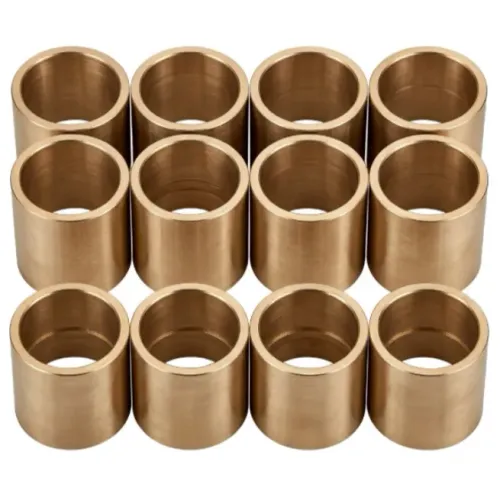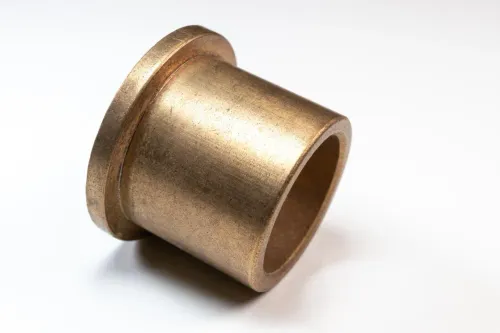
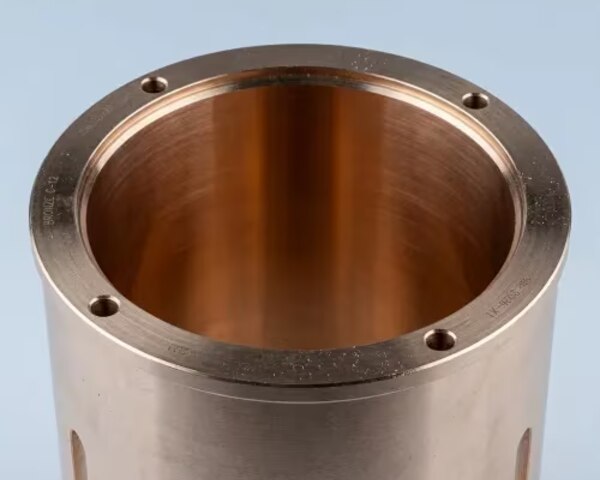
A finished cone crusher eccentric bush starts with more than a diameter and a bronze label: the drawing, alloy, core location, casting route and machining datums all control whether it will hold its fit under load. By following the route from pattern and mould through pouring, shakeout, machining and inspection, you can specify the part, assess a cast blank and challenge a supplier’s quality claims.
Key takeaways
- Add shrinkage, machining stock, draft and distortion allowances to the pattern.
- Match the copper alloy to load, wear, corrosion and lubrication conditions.
- Inspect bore, eccentricity, wall thickness, surface defects and material records before approval.
- Machine from a sound, traceable casting blank—not from dimensions alone.
What the Drawing and Pattern Must Establish Before Casting
Finished dimensions become a usable casting pattern only after the drawing adds shrinkage, machining stock, draft and any expected distortion. A pattern copied directly from the finished bush will usually produce an undersize part, because metal contracts and the machinist needs material to remove.
The drawing must explain how cone crusher eccentric bushes are made from a controlled blank:
1. Confirm the alloy and casting route first. Shrinkage allowance differs between brass sand casting and centrifugal casting, and it also depends on pattern material and foundry practice.
2. Mark the parting line, draft direction and machining datums. Put extra stock on the outside diameter, bore and end faces, then record each allowance rather than relying on a standard figure.
3. Design the core to establish the bore, not merely to create a hole. Use core prints, positive locating features and rigid support; core shift leaves one side thin even when the final bore measures correctly.
4. Check the eccentric offset from the specified datum and preserve the relationship between bore and outside diameter. A diameter check at one position cannot prove concentricity.
5. Inspect rough-cast stock at several angular positions before finish machining. Adequate wall thickness at one clock position can hide a thin section elsewhere, causing the bore operation to break through or leave a non-uniform bearing wall.
The released pattern drawing should identify pattern number, revision, alloy, allowances, core details and inspection datums. Without those controls, a good-looking casting remains an assumption rather than a machinable bush.
How the Mould, Alloy and Pour Create the Bush Blank
The pattern is placed in a moulding box, and the foundry packs prepared sand around it to create the external cavity. A core forms the bore when the design calls for a cast hole; otherwise, the bore is left solid and machined later.
The runner delivers molten alloy into the annular cavity, while vents release gas and a riser supplies liquid metal as the bush contracts.
The cone crusher eccentric bush casting process depends on controlled filling, not appearance alone. The foundry adjusts sand moisture, permeability, pouring temperature, gate size and riser position to prevent misruns, cold shuts, trapped gas and shrinkage cavities. After cooling, workers remove the sand, cut off the runner and riser, and inspect the blank before machining.
The brass sand casting process uses a stationary pattern and expendable sand mould. Centrifugal casting uses a rotating mould, driving molten metal outward against its wall and producing a dense cylindrical blank.
| Process | How the bush blank forms | Main control or limitation |
|---|---|---|
| Brass sand casting | Sand supports the pattern; a core can create the bore | Flexible shapes, but poor venting or incorrect risering causes gas and shrinkage defects |
| Centrifugal casting | Rotation forces alloy against the mould wall; the bore is formed by the inner cavity or machined afterward | Dense cylindrical sections, but wall thickness and geometry depend on rotation and mould design |
| Either route | The alloy charge is melted, temperature-checked and poured into the prepared cavity | Retain the heat or pour number and chemical analysis tied to the batch |
A certificate stating only “brass” or “gunmetal” does not identify the alloy grade. Require the specified copper-alloy designation and batch chemistry before accepting the casting.
How Alloy Choice and Casting Controls Prevent Early Failure
Choose the copper-alloy family from load, speed, lubrication and mating-shaft conditions, not from the colour or the word “bronze.” The drawing must name a specific grade and condition because similar-looking alloys differ in strength, seizure resistance, corrosion performance and machinability.
| Alloy family | Main advantage | Suitable decision point |
|---|---|---|
| Tin bronze | Strong bearing and seizure resistance | General crusher bushes with reliable lubrication |
| Aluminium bronze | Higher strength and load capacity | Heavy loads, shock loading or poorer lubrication |
| Leaded tin bronze | Easier machining and improved embedability | Boundary lubrication and contamination-prone service |
Verify the cast blank before releasing it to machining:
- Tie the chemical-analysis report to the heat or pour number; “gunmetal,” “brass” or “bronze” alone proves nothing.
- Examine cropped ends and test sections for shrinkage cavities, gas pores, oxide or sand inclusions, segregation, hot tears and casting cracks. A clean machined surface can hide defects deeper in the wall.
- Specify radiography, ultrasonic testing or liquid penetrant testing against written acceptance limits agreed before casting. Copper alloys produce different signal quality, so use an alloy-specific procedure rather than a borrowed steel standard.
- Check the centrifugal-casting speed, pour identification, wall-thickness records and dimensional runout. Rotation improves sleeve density but does not remove porosity or segregation.
- Obtain the stated as-cast, stress-relieved or heat-treated condition, with the actual cycle recorded when treatment applies.
How a Cast Blank Becomes a Finished Eccentric Bush
A bore cut before a stable datum is established can leave the bush with correct diameters but poor concentricity. After shakeout, remove gates, risers and adhering sand, then inspect the blank for adequate wall stock before cone crusher bush machining begins.
1. Face one end and rough-turn the outside diameter to create the primary datum. Support the casting firmly; core shift cannot be corrected if one side lacks machining stock.
2. Set the blank from the established face and outside reference, then rough-bore and finish-bore the eccentric or concentric internal diameter. This establishes the bore position, size and relationship to the datum rather than treating each diameter as an independent measurement.
3. Finish-turn, or grind where the drawing requires it, the outside diameter from the controlled bore and face datums. Check wall thickness and concentricity while the part remains set up.
4. Make the final facing cut to achieve finished length and parallelism. This prevents a later face cut from altering the bore-to-face relationship.
5. Machine oil grooves, lubrication holes and reliefs last, locating them from the finished bore, faces and drawing datums. Confirm groove depth, width, termination and passage alignment; a groove entering a loaded zone can reduce bearing area.
| Operation | Feature established | Main control |
|---|---|---|
| Datum facing and rough turning | Reference face and stock diameter | Rigid support and runout |
| Boring | Finished bore | Shaft fit, wall thickness and concentricity |
| OD finishing | Housing fit | Bore-to-OD relationship |
| Final facing | Length and parallel faces | Face-to-bore location |
| Grooves and oil holes | Lubrication system | Position, depth and safe termination |
|
What to Measure, Document and Confirm Before Approval
Approve the bush against the drawing and mating parts, not against appearance. A smooth bronze surface can conceal shrinkage porosity, gas holes, inclusions, hot tears or a bore opened on one side by insufficient casting stock.
1. Confirm the drawing revision, bore, outside diameter, face width, eccentric offset, roundness, cylindricity, wall thickness and oil-groove dimensions. Record the installed interference or clearance and running clearance against the actual shaft and housing; nominally matching dimensions can still cause seizure, fretting or oil-film loss.
2. Check concentricity between the bore and outside diameter, plus face runout and perpendicularity. Use a calibrated bore gauge, micrometer, height gauge or CMM, and retain the inspection sheet with instrument identification and calibration due date.
3. Match the alloy to the purchase specification and request chemistry results for the melt or heat. Ask the supplier to state whether the bush is as-cast, stress-relieved or stabilized; heat treatment is alloy- and process-dependent, not automatic.
4. Specify NDT before production: ultrasonic testing, dye penetrant testing or radiography only where the alloy and part criticality justify it. Agree the method, inspected zones and reject limits before testing, because copper alloys produce different indications.
5. Require the pattern and core record, melt and pour batch, casting route, heat-treatment chart, machining report, NDT report and final traceability number. An eccentric bush manufacturer in Delhi, such as Kamal Deep Metal Works Pvt Ltd, should connect those records to one finished part rather than offer an untraceable replacement.
Related product
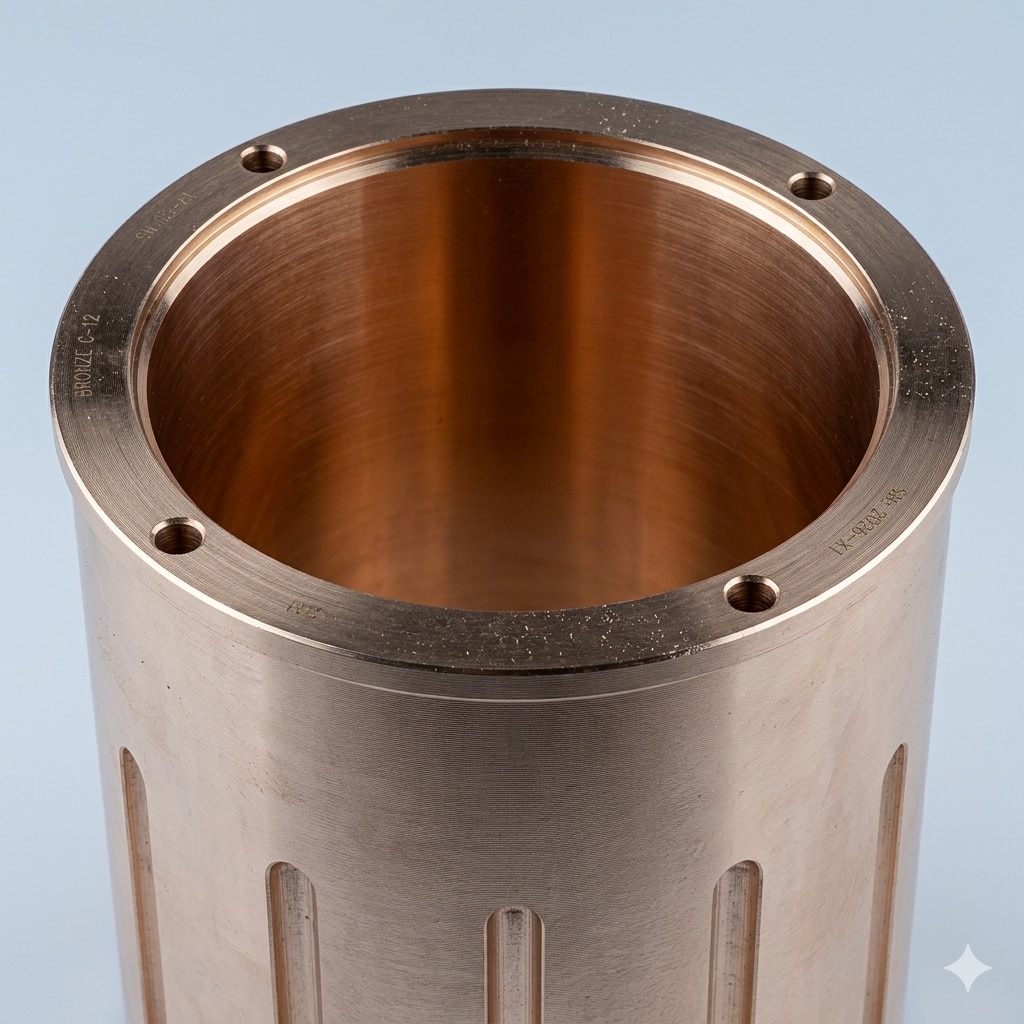 | Brass Sand Casting Usage/Application Industrial Material Bronze Country of Origin Made in India Color Golden Minimum order quantity: 2 Kg KAMALDEEP METAL WORKS PRIVATE... View product → |
Frequently asked questions
What must a cone crusher eccentric bush pattern establish before casting?
The drawing and pattern must include finished dimensions, metal shrinkage, machining stock, draft and expected casting distortion.
How is a cone crusher eccentric bush casting made?
The foundry prepares a sand mould, selects the copper alloy, pours the melt, allows it to solidify and removes the bush blank for inspection.
How does alloy choice affect eccentric bush life?
The alloy must suit the bush’s load, sliding wear, corrosion exposure and lubrication conditions; the wrong grade can cause premature wear or seizure.
What is checked during cone crusher bush machining?
Machining establishes the bore, outside diameter, eccentric offset, faces, grooves and fits while preserving enough sound metal for final dimensions.
What should you confirm before approving a finished eccentric bush?
Confirm dimensions, eccentricity, surface condition, material grade, heat or batch traceability, inspection results and conformity with the drawing.
Keywords