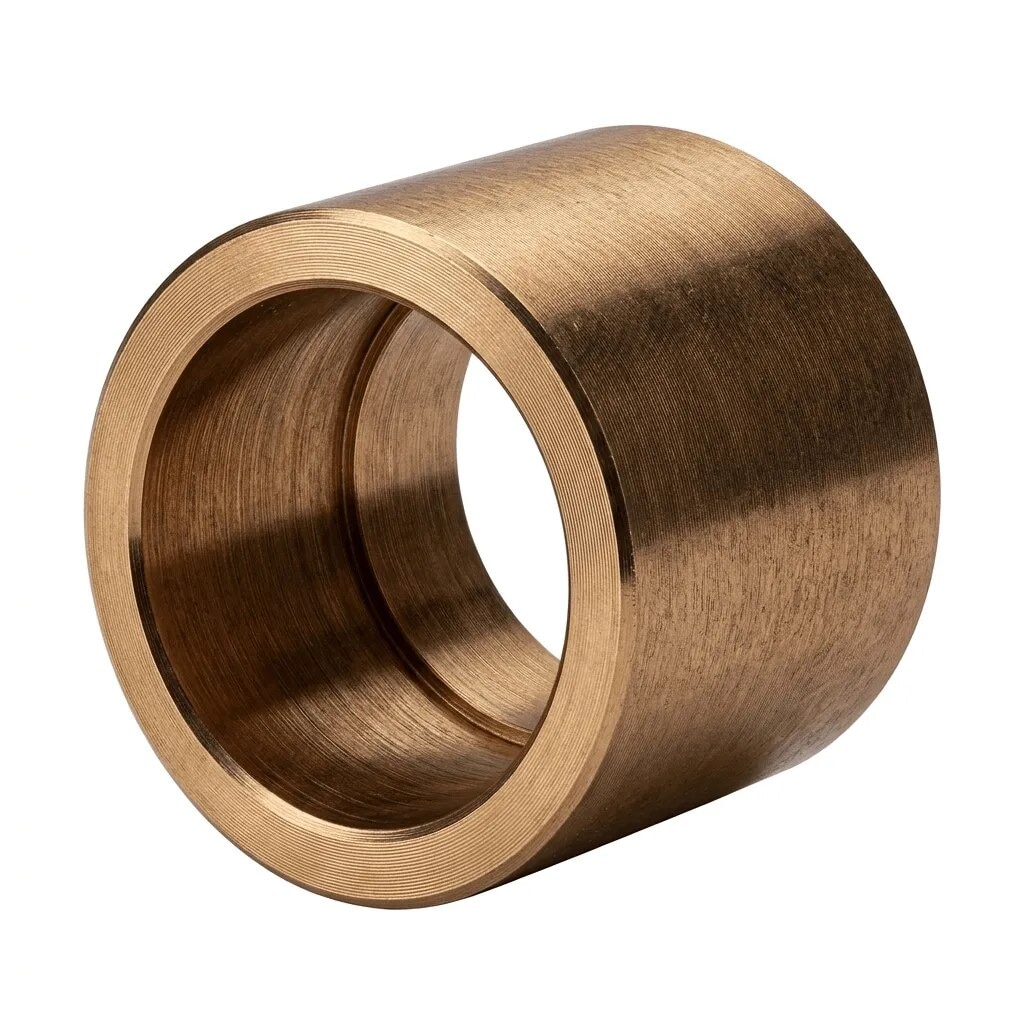
A quotation for a phosphor bronze bush can cover anything from an as-cast blank to a finish-machined, inspected component with full traceability. Before you approve it, define the alloy, casting route, finished dimensions, machining state, inspection records, packing and delivery documents so the supplied part matches the installed requirement.
Key takeaways
- State alloy grade, temper, dimensions and required standards on the purchase order.
- Define bore, outside diameter, length, grooves, holes and lubrication features from one drawing.
- Specify machining allowance, tolerances, inspection checks and certificates before production starts.
- Confirm fit, lubrication method and which supplier documents accompany the bushes.
What should arrive with a complete phosphor bronze bush order?
A complete order answers one question: what is included with a phosphor bronze bush order? Separate the physical bush from its drawing, machining scope, inspection records, certificates and delivery paperwork.
1. Identify the finished bush as cast-to-size, rough-machined with allowance, or fully machined and finished. State whether the bore, outside diameter, grooves and edge details are supplied as-cast, rough-bored or to final size.
2. Attach a dimensional drawing showing finished bore diameter, outside diameter, length, wall thickness, tolerances, datum references, chamfers, radii, grooves, holes, keyways and flanges. Define each feature instead of relying on nominal ID × OD × length.
3. State whether measurements apply to the free bush, the pressed-in bush or the final line-bored condition. Include the machining allowance and the required boring, turning, honing, surface finish and dimensional inspection scope.
4. Request an inspection report with measured dimensions, roundness, cylindricity, concentricity or wall-thickness results where specified, plus the inspection method and instrument. “Checked” alone is not evidence.
5. Request a material certificate naming the alloy designation, heat or melt number and chemical analysis. List hardness, tensile properties, yield strength, elongation, conductivity or metallographic condition as separate acceptance requirements; chemical analysis does not prove them.
6. Require delivery documents identifying the purchase order, quantity, drawing revision, heat number, packing method and dispatch details. Packing must protect the bore and machined surfaces from impact, corrosion and contamination; confirm whether oil, grease or preservative is included or excluded.
Which phosphor bronze bush specifications belong on the purchase order?
Put the exact alloy on the purchase order: use PB2 where that designation is accepted by your specification, or name the equivalent UNS grade and governing material standard. “Phosphor bronze” alone is inadequate; tin, phosphorus, lead, zinc and iron levels change strength, machinability and bearing behaviour.
Require chemical limits and a material test report linked to the heat or melt number.
| Route | Standard | Why it must be stated |
|---|---|---|
| Centrifugal casting | ASTM B271 | Controls for cast structure, shrinkage, porosity and permissible defects differ from other routes |
| Continuous casting | ASTM B505/B505M | Applies to continuously cast copper-base products with route-specific acceptance criteria |
| Sand casting | ASTM B584 | Allows a different defect profile and inspection basis |
| Other approved route | Named process and standard | Prevents an unapproved manufacturing method being substituted |
Add hardness, tensile strength, yield strength, elongation, conductivity or metallographic condition when the service load requires them. State whether acceptance follows the named material standard or an approved internal acceptance drawing.
Include these service inputs with the phosphor bronze bush specifications:
- Radial load and speed
- Oil or grease type, viscosity or grade, and lubrication method
- Shaft material and hardness
- Operating temperature
- Dust, water or abrasive contamination
- Required operating life
A generic alloy and nominal size cannot establish an allowable load-speed combination. Also identify the manufacturing location, casting route, traceability arrangement and responsibility for nonconforming castings; confirm whether melting, casting, machining and inspection are controlled by the quoted supplier or subcontracted.
How should phosphor bronze bush dimensions and features be defined?
1. Define all phosphor bronze bush dimensions beyond nominal ID × OD × length. State the bore diameter at a named axial location and whether it is measured on the free bush, after pressing into the housing, or after final line boring.
For tight tolerances, name the measurement temperature and gauge method, such as a calibrated bore gauge at 20°C.
2. Specify whether the outside diameter applies to the free bush or installed housing condition. Add roundness, cylindricity, concentricity and maximum wall-thickness variation where they control fit. Define length between the actual end faces, end-face squareness, bore and outside-diameter tolerances, length tolerance, chamfers, radii, end reliefs and surface-finish values.
3. Give the housing bore and shaft dimensions separately, including their tolerances. The supplier cannot calculate the correct pre-machined bore without the actual interference and final installed target because pressing can reduce and distort the bore.
4. Put grooves, oil pockets, grease holes, keyways, flanges and anti-rotation features on the controlled drawing, not in a presumed standard supply. Show each groove’s cross-section, width, depth, quantity, angular position and distance from both ends. Show each hole’s diameter, count, angle, entry face and termination, and state whether it breaks through the bearing surface.
Keep holes and deep grooves outside high-load zones, then verify the remaining wall thickness.
What phosphor bronze bush machining level and inspection should you order?
Choose the machining level before accepting a quotation: cast-to-size, rough-machined casting, or fully machined and finished bush.
| Option | What it means | When it applies |
|---|---|---|
| Cast-to-size | Casting surfaces remain; no controlled bore or finish machining | Only where bore, roundness and fit are non-critical |
| Rough-machined | Scale is removed and datums are established, with a stated allowance for boring and turning | When final machining occurs at your facility or later |
| Finished | Bore, outside diameter, length, grooves and edge details meet the drawing | When the bush is ready for installation or line boring |
Set the allowance from the casting route, diameter, wall thickness, distortion risk and final tolerance. Never copy a universal value between jobs.
1. Require a phosphor bronze bush machining plan showing datum selection, clamping, roughing and finishing sequence, tool geometry, coolant and allowance removal. Specify turning, boring and honing where required, plus maximum surface roughness for the bore and outside diameter. Rubbing, tool wear and distortion can push a bore out of tolerance.
2. Define 100% dimensional inspection separately. Measure the bore with a calibrated bore gauge or air gauge, the outside diameter with a micrometer, and length with a calibrated height or length gauge. Record roundness, cylindricity, concentricity and wall thickness when specified.
3. List visual casting-surface inspection, chemical verification and hardness testing as separate acceptance requirements. Use liquid-penetrant inspection for relevant surface-breaking defects and an agreed radiographic method for internal soundness when service risk justifies it. Magnetic-particle inspection is unsuitable for this non-ferromagnetic alloy.
How should fit, lubrication and supplier responsibility be confirmed?
A bush that measures correctly on the bench can fail after installation. Specify housing interference and shaft running clearance from the measured housing bore and shaft diameter, then account for housing and shaft materials, operating temperature and thermal expansion. Pressing can reduce or distort the bore, so do not size it from nominal dimensions.
1. State whether the bore is supplied as-rough, finish-machined, measured free, measured after pressing, or final line-bored. Identify any line-boring allowance and the alignment method. Install it with a guided mandrel supporting the correct end face; prevent skew and never impact the bearing surface.
2. Record the lubricant type, oil viscosity or grease grade, delivery method, relubrication interval and contamination controls. Show each groove, pocket and grease hole on the drawing, including cross-section, quantity, angular position and termination distance from both ends.
Keep them outside the highest-load zone, preserve the loaded land and verify that they do not weaken the wall.
3. Treat “phosphor bronze bush supplier in delhi” as a location search, not proof of capability. Ask whether the quoted party controls melting, casting, machining and inspection or subcontracts them. Put the manufacturing location, casting route, heat or melt traceability, responsibility for nonconforming castings and the document package in the order.
Kamal Deep Metal Works Pvt Ltd belongs on the comparison only after those controls are verified against the drawing, installation method and service requirement.
Related product
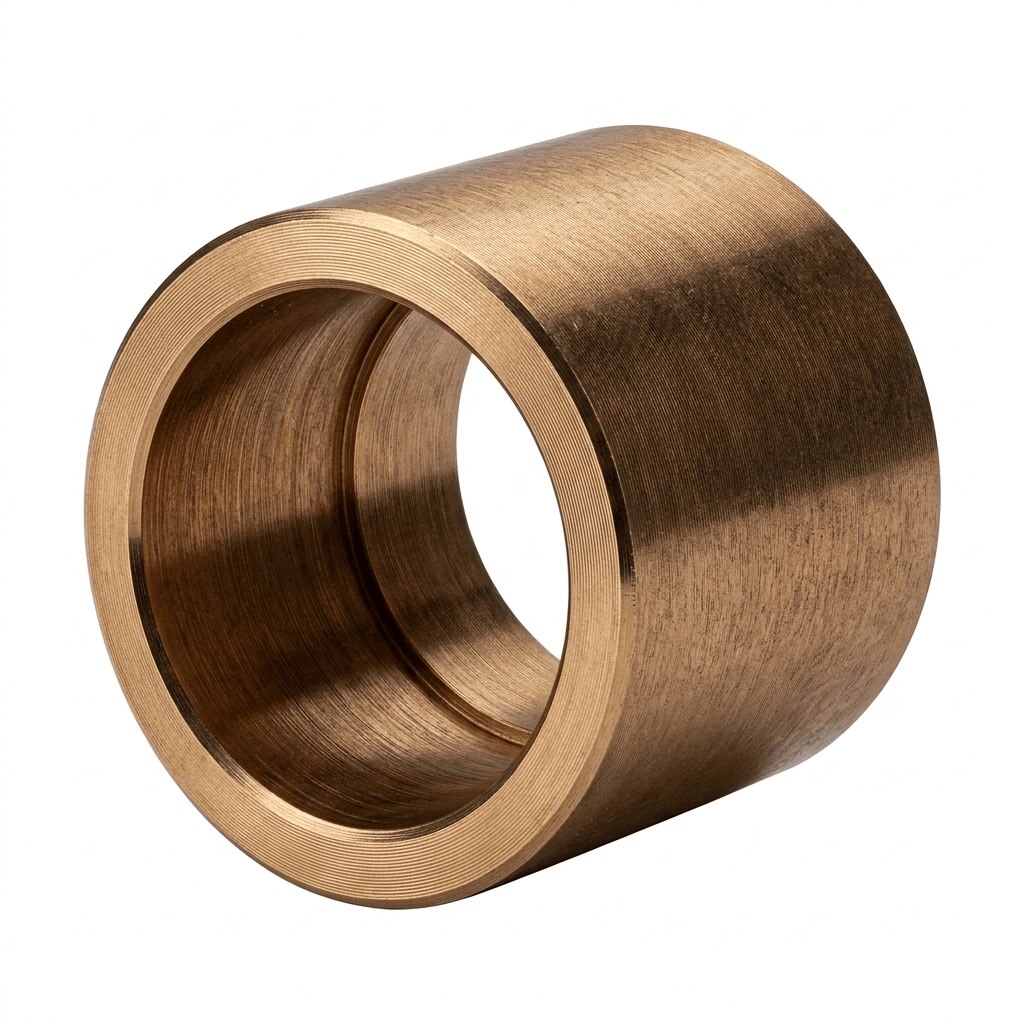 | Centrifugal Casting Usage/Application as per requirement Shape all Color BRONZE I Deal In New Only Is It Customized Customized Country of Origin Made in India KAMALDEEP... View product → |
Frequently asked questions
What should arrive with a complete phosphor bronze bush order?
The order should include the bushes, approved drawing, machining scope, inspection records, material certificate and delivery paperwork.
Which specifications belong on a phosphor bronze bush purchase order?
State the alloy grade, condition, dimensions, applicable standard, quantity, heat or batch traceability and any required certificate.
How should phosphor bronze bush dimensions and features be defined?
Use a controlled drawing that identifies the bore, outside diameter, length, tolerances, chamfers, grooves, lubrication holes and datum references.
What machining and inspection details should you order?
Specify the finished machining level, stock allowance if supplied semifinished, dimensional checks, surface finish, hardness or material tests and required inspection report.
Keywords